Safety Switch Installation Sydney: 2026 Homeowner Guide
Did you know that electrical faults cause 40% of house fires across Australia? In Sydney's older suburbs, where decades-old wiring meets the heavy power demands of modern air conditioning, the need for professional safety switch installation isn't just a recommendation; it's a critical life-saving priority. You might feel a sense of unease when your power trips while the kettle is on, or perhaps you're confused about whether your switchboard actually has RCD protection or just outdated circuit breakers. It's completely natural to feel anxious about the safety of your family and the potential costs of a full system upgrade.
This guide explains why modern RCDs are your home's most vital defence against fire and electrocution. You'll learn how to ensure your property meets the mandatory AS/NZS 3000 standards and why the ban on Type AC RCDs makes a professional audit essential in 2026. We'll preview the technical requirements for modern protection and show how Level 2 ASP experts manage the complex infrastructure needed to provide your household with a reliable, compliant, and life-saving power supply for total peace of mind.
Key Takeaways
• Understand why a modern RCD is your final line of defence against electrocution, shutting off power in less than 0.03 seconds when a fault occurs.
• Learn about the latest AS/NZS 3000 requirements that mandate dedicated protection for every circuit in your home, including lighting and air conditioning.
• Recognise the specific warning signs, such as outdated ceramic fuses, that signal your property requires an urgent safety switch installation to remain compliant.
• Gain insight into the professional installation process, including how Level 2 ASP experts manage consumer mains and earthing systems for a robust electrical foundation.
• Discover the specialised protection requirements for modern high-load additions like EV chargers and solar power systems to ensure your switchboard remains safe.
What is a Safety Switch and Why is it Mandatory in Sydney?
A safety switch is a precision electronic device designed to monitor the flow of electricity through a circuit. If it detects a discrepancy, it acts as a life-saving circuit interrupter by shutting off the power in as little as 0.03 seconds. Many homeowners use different terms for this technology, including What is a Residual-Current Device (RCD)?, safety switch, or the modern hybrid known as an RCBO. While these names vary, their purpose remains the same: preventing fatal electric shocks.
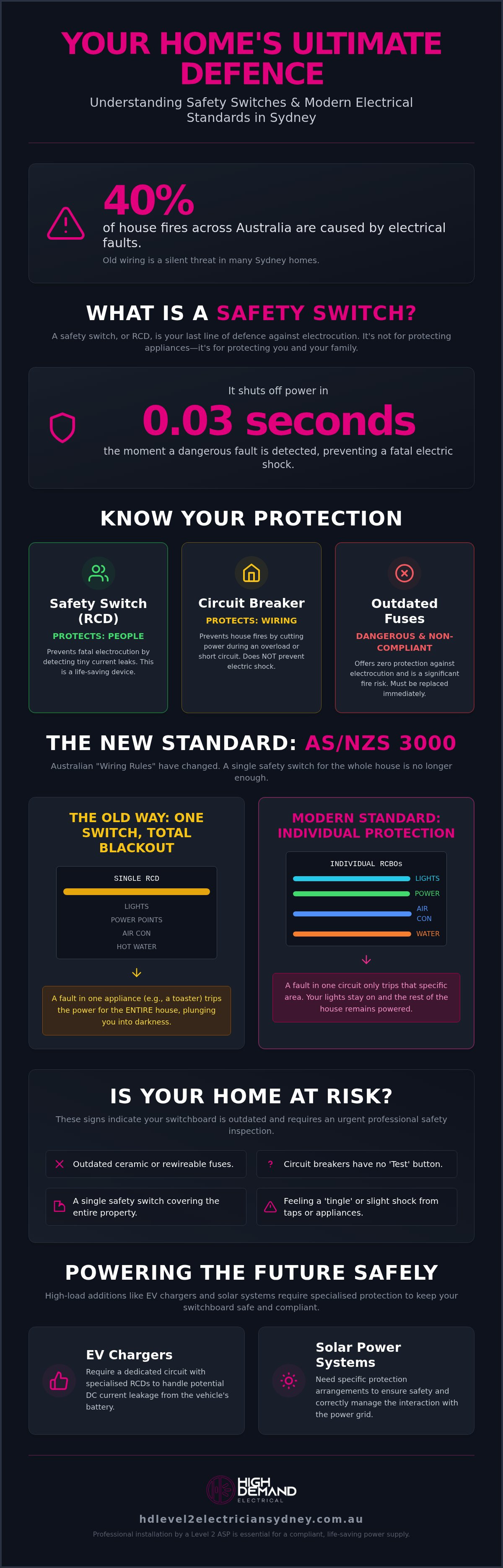
There is a critical distinction every Sydney resident must understand. Circuit breakers and old-fashioned fuses are designed to protect your home's wiring from melting or catching fire. They don't protect you from electrocution. A safety switch, however, is specifically engineered to detect tiny amounts of electricity leaking to earth, which is exactly what happens when power passes through a human body.
In the current regulatory climate of 2026, the AS/NZS 3000 "Wiring Rules" make comprehensive RCD protection mandatory for all final sub-circuits in NSW. Whether you are under the Ausgrid or Endeavour Energy networks, a professional safety switch installation by a Level 2 ASP is no longer a luxury upgrade. It is a legal requirement for new work and the only way to ensure your switchboard meets modern Australian Standards.
RCD vs. Circuit Breaker vs. Surge Protector
Relying on old ceramic fuses in an older Sydney terrace or bungalow offers zero protection against electrocution. These components only blow when a circuit is severely overloaded. Similarly, surge protectors are designed to save your expensive OLED TV or computer from voltage spikes; they won't stop a fatal current from reaching your heart. The gold standard for modern homes is the RCBO. This unit combines the overcurrent protection of a circuit breaker with the life-saving capabilities of an RCD into a single, compact device.
The "Tingle" Factor: When Your House is Trying to Warn You
If you have ever felt a slight "tingle" or a small shock when touching a metal tap, a toaster, or a fridge, your home is providing a desperate warning. This sensation indicates that electricity is escaping its intended path and seeking a way to the ground. A professional safety switch installation identifies these faults before they escalate into a tragedy. Current leakage is the primary trigger for an RCD trip.
Australian Standards: Why One Safety Switch is No Longer Enough
Many older Sydney homes still rely on a single safety switch to protect the entire property. While this met the regulations of twenty years ago, it's now considered a significant safety risk and a major technical inconvenience. Under the updated AS/NZS 3000:2018 "Wiring Rules," the requirement has shifted to protecting every individual circuit. This includes lights, power points, air conditioning units, and hot water systems. A modern safety switch installation ensures that your home is not just compliant, but truly safe for every occupant.
One of the biggest issues with a single-switch setup is the "darkness factor." If a minor fault occurs in a toaster or a damp outdoor light, the entire house is plunged into darkness. Individual circuit protection ensures that if the kitchen power trips, your hallway lights and fridge remain operational. This is a critical safety feature, especially for families with young children or elderly residents who are at risk of trips and falls during a total blackout.
Sydney's humid climate and our love for outdoor living make specific protection for wet areas essential. Bathrooms, laundries, and pool pumps are high-risk zones. According to guidelines from SafeWork NSW, these areas require robust RCD monitoring to mitigate the heightened risk of electrocution where water and electricity meet. Every circuit in these zones must be individually protected to prevent a small leak from becoming a fatal event.
The AS/NZS 3000 "Wiring Rules" Explained
These mandatory standards govern every safety switch installation in Australia. When you modify a circuit or add a new one, the law requires that the entire switchboard be brought up to current code. For many Sydney homeowners, this means a full switchboard upgrade is necessary to accommodate the physically larger RCBOs. Landlords have a legal obligation to ensure their rental properties comply with these standards. Failing to do so can result in heavy fines and may void your building insurance in the event of an electrical fire.
Nuisance Tripping: The Downside of Poor Installation
Not all safety switches are created equal. Cheap, generic components are prone to "nuisance tripping," where the power cuts out without an actual fault being present. We only use high-quality hardware from trusted brands like Clipsal or Schneider to ensure long-term reliability. If your power is cutting out frequently, it might be time to organise a professional switchboard audit to identify if the issue is a genuine fault or a failing, low-quality switch. Our Level 2 ASP experts look at the entire infrastructure, from consumer mains to the earthing stake, to guarantee a stable power supply.
Signs Your Sydney Home Needs an Urgent Safety Switch Installation
Many homeowners in Sydney's established suburbs don't inspect their switchboards until a complete power failure occurs. However, your electrical system often provides clear sensory warnings before a catastrophic fault. If you notice a persistent "fishy" smell or the scent of burning plastic near your meter box, this is a critical emergency. These odours indicate that electrical insulation is melting due to arcing or overheating. In such cases, a professional safety switch installation is the only way to prevent a potential structure fire.
Frequent tripping is another symptom that requires immediate attention. While it's tempting to simply flip the switch back on, repeated tripping is a diagnostic signal that a fault exists within your appliances or wiring. Similarly, if your lights flicker or dim when high-draw appliances like a clothes dryer or air conditioner kick in, your system is struggling to manage the load. These signs indicate that your current protection is inadequate for modern power demands and poses a direct risk to your family's safety.
The Ceramic Fuse Danger
The presence of white porcelain wedges, known as ceramic fuses, is the most significant indicator that your home is at risk. These antiquated components were designed for the electrical needs of the 1950s, not the 2020s. Ceramic fuses are the primary cause of electrical house fires in older Sydney properties because they only "blow" during a massive overload. They are completely incapable of detecting the tiny, millisecond current leaks that lead to fatal electrocution. If you still have these fuses, you should prioritise a Switchboard Upgrade Sydney: Preventing House Fires to replace them with modern RCBOs.
Responding to an Ausgrid or Endeavour Energy Defect Notice
Sometimes, the warning comes from the network provider rather than the house itself. If a meter reader from Ausgrid or Endeavour Energy identifies a safety hazard, they will issue a formal defect notice. This isn't a suggestion; it's a legal directive. You typically have a strict window, often 21 days, to rectify the issue before your property is disconnected from the grid. As Level 2 ASP experts, we specialise in resolving these notices by modernising your infrastructure. We handle the complex coordination between the street mains and your switchboard, ensuring your safety switch installation meets all current NSW service and installation rules. This rapid response protects your power supply and ensures your home remains a compliant, safe environment.
The Installation Process: What to Expect from a Level 2 Electrician
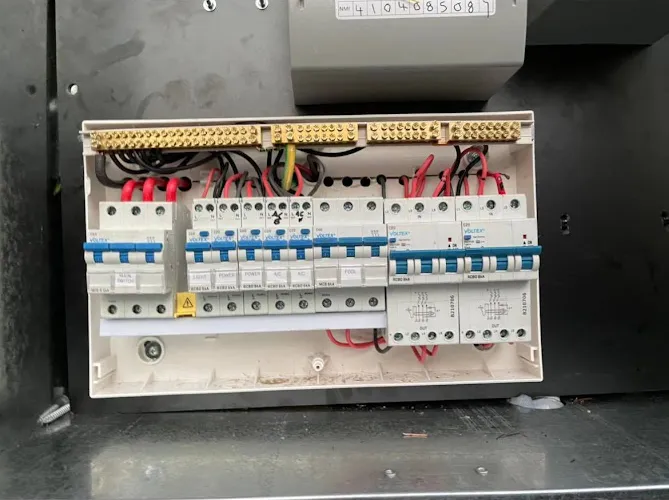
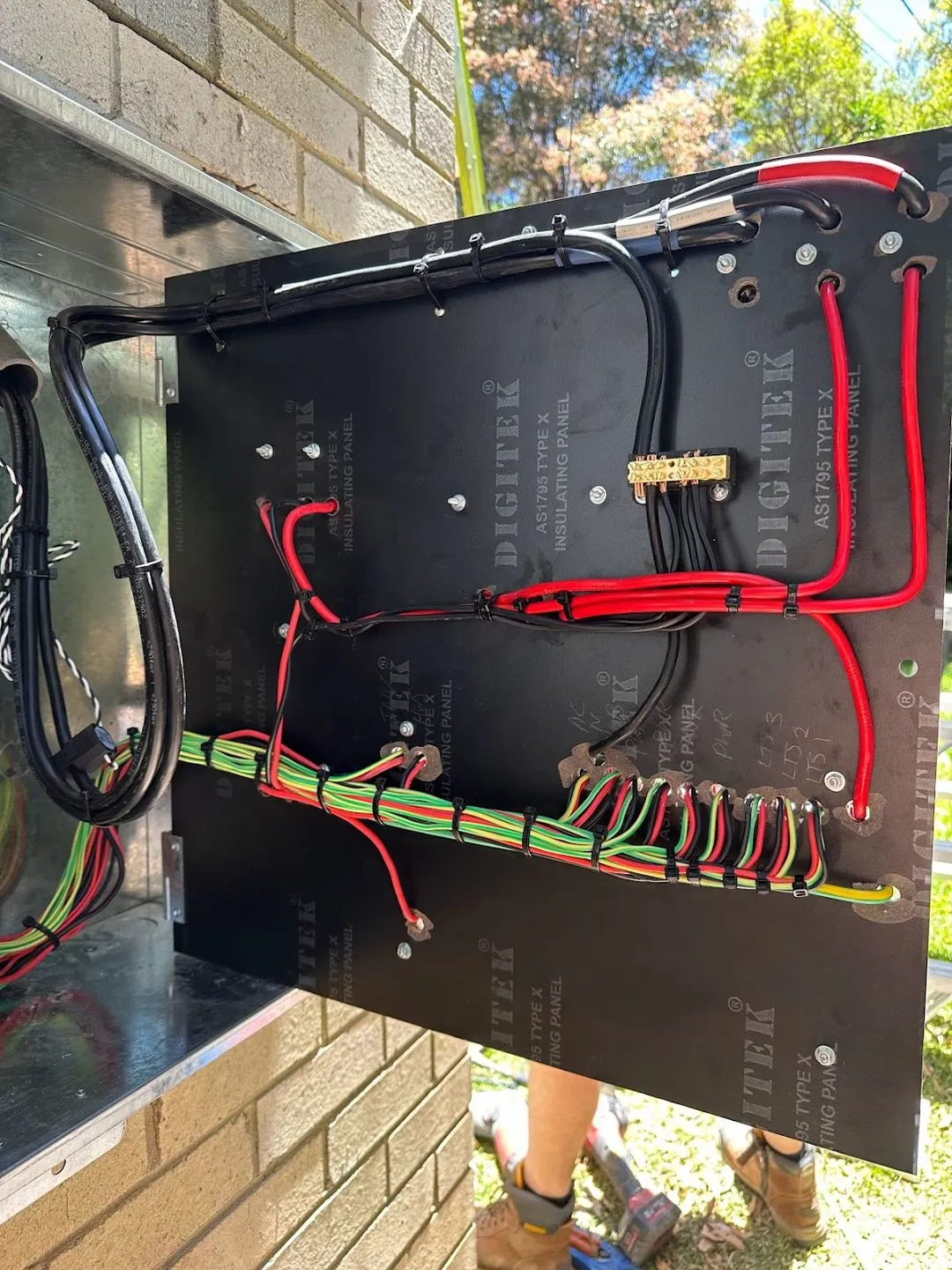
A professional safety switch installation follows a methodical, high-stakes sequence to ensure the entire electrical infrastructure of your property is sound. The process begins with a comprehensive site audit. Our experts don't just look at the switches; we inspect the integrity of your consumer mains and the condition of your earthing system. This step is vital because a safety switch cannot function correctly without a reliable path to the ground. If your earthing stake is corroded or your mains are undersized, the most expensive RCD in the world won't protect you.
Once the audit is complete, you should prepare for a period of circuit isolation. Your power will typically be off for 2-4 hours during the upgrade. This window allows our technicians to safely remove antiquated hardware and rewire the board for modern RCBOs. These hybrid components replace individual fuses and old circuit breakers, providing both overcurrent protection and life-saving leakage protection in one compact unit. It's a precise task that requires absolute focus and technical depth.
After the physical components are fitted, we perform mandatory testing using a calibrated RCD tester. We verify that every switch trips in under 30 milliseconds. This speed is the non-negotiable benchmark for human safety. Finally, we lodge a digital Certificate of Compliance Electrical Work (CCEW) through the Building Commission NSW eCert portal. This document is your legal proof that the work meets the AS/NZS 3000 standards and is essential for insurance purposes.
Why Level 2 ASP Accreditation Matters for Your Switchboard
Standard electricians often lack the legal authority to work on the network side of your meter. As Level 2 ASP specialists, we manage the complex connection between the street and your home. If your safety switch installation reveals degraded consumer mains or a faulty point of attachment, we have the accreditation to repair it immediately. You won't have to wait for a second contractor or a network utility crew to arrive. For a deeper look at these technical requirements, see our Level 2 ASP Electrical Services: The Complete Guide.
Testing and Maintenance: The Six-Month Rule
Your new protection requires ongoing vigilance to remain effective. We recommend the "six-month rule" for all Sydney homeowners. Locate the "Test" button on your new RCBOs and press it twice a year. This simple action keeps the internal mechanical components lubricated and responsive. The test button simulates a fault to verify the mechanical trip mechanism is functioning exactly as intended. If your switchboard hasn't been audited in over a decade, book a professional switchboard inspection today to secure your home's electrical foundation.
Safety Switches and Modern Power Demands: EV Chargers and Solar
Modern Sydney homes are no longer just living spaces; they have become sophisticated power hubs. With the rapid adoption of electric vehicles and high-capacity solar arrays, your switchboard faces levels of electrical stress that were unimaginable a decade ago. A professional safety switch installation in this modern context involves more than just swapping a fuse. It requires a technical understanding of how these high-load devices interact with your home's infrastructure. As Level 2 ASP specialists, we ensure that your switchboard is not only compliant but also robust enough to handle these evolving energy needs.
Solar inverters also significantly alter your home's electrical safety profile. Because solar adds a second source of power to your property, your safety switches must be capable of isolating both the grid and the solar supply instantly during a fault. This complexity is why generic electrical work often falls short. We focus on future-proofing your home, ensuring that any RCD upgrade today prepares your system for potential 3-phase power transitions tomorrow. This proactive approach supports larger ducted air conditioning systems and faster vehicle charging without compromising the safety of your family.
EV Charger Safety Requirements
Tesla and other home EV chargers introduce a specific technical risk known as DC residual current. Standard Type A safety switches, which are common in many Sydney renovations, can become "blinded" or saturated by this DC leakage. If this occurs, the switch may fail to trip during a life-threatening fault. A dedicated Type B safety switch is a mandatory requirement for these circuits because it is specifically engineered to detect both AC and DC faults. We integrate this specialised protection into every EV Charger Installation Sydney: 2026 Homeowner Guide to ensure your charging setup remains a safe asset rather than a hidden liability.
Total Peace of Mind for Sydney Families
Investing in a modern safety switch installation is quite simply the most cost-effective insurance policy you will ever purchase. It transforms your property from a potential fire risk into a secure, compliant environment. Our "Authoritative Rapid Responder" approach means we don't just fix the surface issues; we identify the underlying infrastructure vulnerabilities that generalists might miss. We take pride in being the dependable local safeguard for Sydney households, providing the technical reassurance you need to sleep soundly. Don't leave your family's safety to chance or outdated technology. Contact High Demand Electrical for a professional safety switch audit and secure your home's electrical future today.
Securing Your Sydney Home's Electrical Future
Ensuring your household is protected from the invisible threat of electrical faults is a non-negotiable responsibility for every property owner. You now understand that while circuit breakers save your wiring, only a professional safety switch installation saves lives by reacting to current leakage in milliseconds. With the rise of high-demand technology like solar inverters and EV chargers, your switchboard must evolve to meet modern Australian Standards. Relying on antiquated ceramic fuses or a single, whole-house RCD is no longer a viable strategy for safety or reliability in 2026.
Don't wait for a flicker or a "tingle" to signal a dangerous fault. Our team brings the technical depth of ASP Level 2 Accredited Specialists and the precision of Tesla Certified EV Charger Installers to every project. We provide 24/7 emergency rapid response across Sydney to ensure your infrastructure remains robust and compliant. Taking action today prevents the stress of a network defect notice or the tragedy of an electrical fire.
Book a Professional Safety Switch Audit with Sydney’s Level 2 Experts to gain total peace of mind and protect your family today. We look forward to securing your home's electrical foundation.
Related Services
Powering Your Needs with Expertise
If you’re looking for a reliable, experienced, and prompt electrician, look no further than High Demand Electrical. We cater to all your electrical needs, from routine maintenance to emergency repairs and complete system installations. Our skilled team is committed to providing professional service that ensures your electrical systems run smoothly. Whether it's a small task or a large project, give us a call today. Let us meet all your electrical demands with the quality and reliability you deserve.