
E-Bike and E-Scooter Charging Safety: What Every Sydney Home Needs to Know
Is it safe to charge an e-bike or e-scooter inside your house overnight? Fire and Rescue NSW specifically advises against it, because a damaged or poor quality lithium battery can ignite with very little warning, and a fire that starts while everyone is asleep is far more dangerous than one that starts while people are awake and nearby. The safest setup charges these batteries in an open area like a garage or shed, away from exits and sleeping areas, on a non combustible surface, using only the charger that came with the battery, with a working smoke alarm in that room. This guide covers what the wiring rules say about the power points and circuits you charge from, and what Fire and Rescue NSW recommends for the battery itself.
👉 See our electrical safety inspection service →
Why this has become a real fire safety issue in Sydney
E bikes, e-scooters and other light electric vehicles have gone from a niche purchase to a genuinely common sight across Sydney in the past few years, and Fire and Rescue NSW now describes lithium ion batteries as the fastest growing fire risk in the state. Unlike a slow smouldering electrical fault, a damaged lithium battery can go from normal to fully alight in seconds, releasing toxic gas well before visible flame appears. Several Sydney house fires reported by Fire and Rescue NSW, including a suspected e-bike blaze and a resident who narrowly escaped an explosion and house fire at Daceyville, trace back to exactly this kind of charging setup.
None of this means you cannot own or charge one of these devices at home safely. It means the charging setup, the battery itself and the circuit it plugs into all deserve more care than a phone charger does.
1. Where to charge, and where not to
Fire and Rescue NSW's guidance is specific: charge in an open area like a garage or shed, away from exits, on a hard surface such as concrete or tiles rather than carpet or timber, and keep the charging area clear of anything that could catch fire nearby. Charging inside a hallway that is also your only escape route, right next to a bedroom, or on a rug or sofa, all turn a manageable battery fault into a trapped, fast moving house fire.
2. Never charge unattended or overnight while asleep
This is the single most repeated piece of advice from Fire and Rescue NSW, and it is worth taking seriously. Do not charge a battery while you are asleep or away from the property, because you cannot smell smoke while sleeping and a battery fire can develop from first signs to full involvement in minutes. Unplug the battery once it reaches full charge rather than leaving it connected indefinitely, and never use or charge a battery that is swollen, bulging, leaking or feels hot to touch.
3. Only use the charger that came with the battery
A charger with the matching plug shape is not the same as a compatible charger. Supplying the wrong voltage or current to a lithium battery is one of the most common causes of overheating and fire, so Fire and Rescue NSW recommends using only the manufacturer's own charger, carrying a visible approval mark showing it complies with the relevant Australian Standards. A cheap generic replacement charger bought separately online is exactly the kind of mismatch that causes problems.
4. The power point and circuit side of the equation
AS/NZS 3000, the wiring rules covering every Australian electrical installation, requires the flexible cord and connection feeding any appliance to be sized for the load it carries, protected against short circuit, and kept as short as practical. A charger plugged directly into a normal power point on a circuit protected by a 30 mA safety switch, as required throughout a standard NSW home, is the baseline a licensed electrician checks for. Where several e-bikes, e-scooters or power tool batteries are charged at once in a garage or shed, piling multiple chargers onto one double adaptor or an old powerboard is the same overload risk covered in our guide to powerboard and double adaptor overload safety, and it is worth having an electrician add a properly sized dedicated power point instead.
5. A smoke alarm in the charging area
Fire and Rescue NSW recommends keeping a working smoke or heat alarm in whatever room is used to charge or store these batteries, which for many Sydney homes means the garage, which does not always have one installed as standard. Hardwired, interconnected smoke alarms are a straightforward addition for a licensed electrician to make alongside other garage or shed power point work, and they give you the earliest possible warning if something does go wrong with a battery overnight.
6. If a battery is already damaged, smoking or on fire
A battery that is already swollen, leaking or overheating should never be charged or used again. Fire and Rescue NSW advises storing a damaged battery outdoors in a well ventilated area, at least three metres from any structure or combustible material, and never placing it in a household bin or kerbside recycling. If a battery is actively smoking or alight, call triple zero immediately rather than attempting to move or extinguish it yourself, since a lithium battery fire can reignite after appearing to be out.
How High Demand Electrical helps
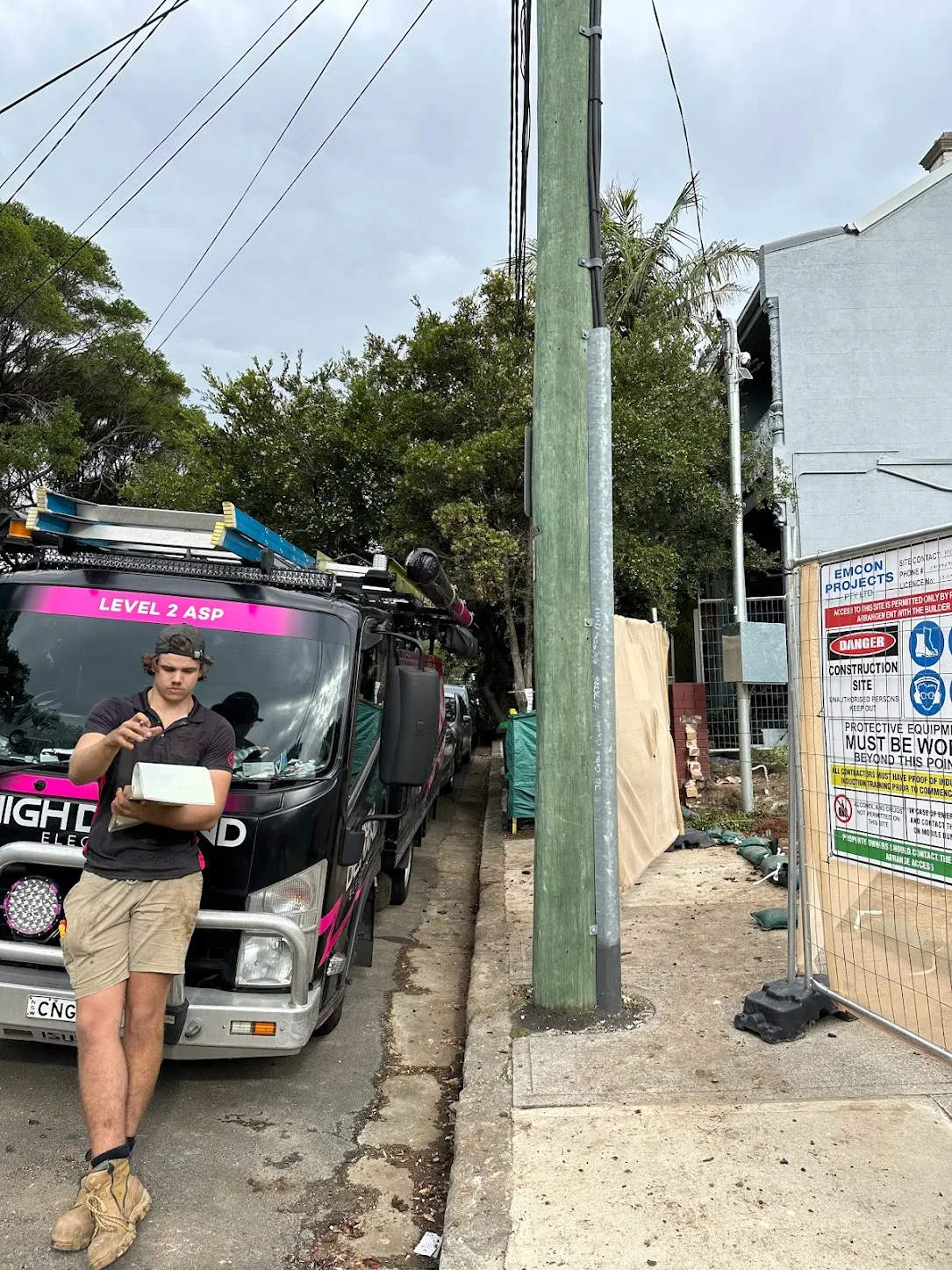
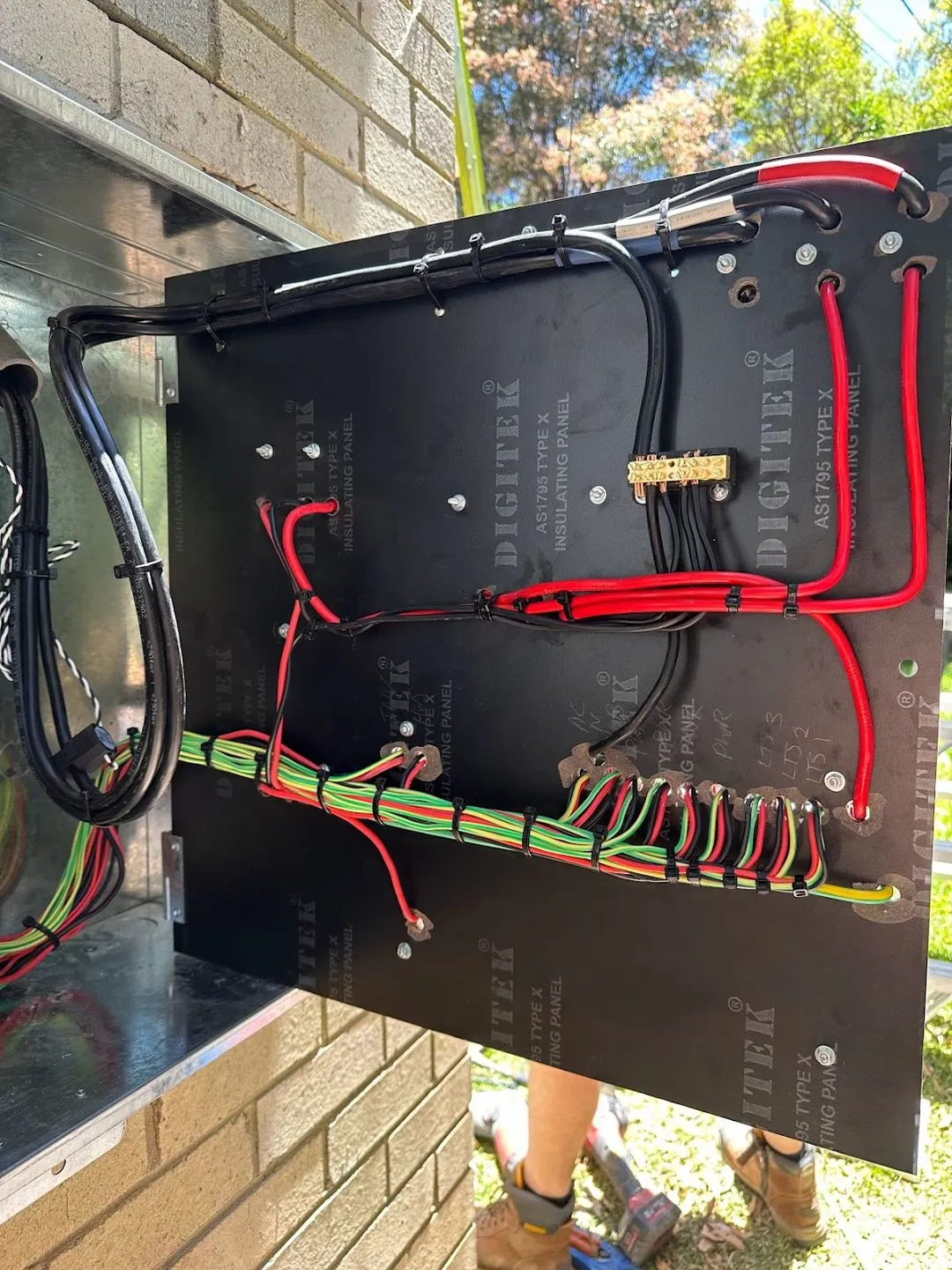
We regularly add properly sized, individually protected power points and safety switch coverage to Sydney garages and sheds being set up as e-bike and e-scooter charging areas, as part of our wider switchboard upgrade and general electrical work. If your garage still runs off one old circuit shared with other appliances, or you are not sure your safety switch coverage actually extends out there, a straightforward electrical safety inspection will confirm it and flag anything that needs attention. One of Sydney's most trusted Level 2 ASPs, we service homes across Sydney's West, South West and Sutherland Shire, and a licensed local team is always the better call than a generic online charger and a hopeful extension lead.
Set Up A Safer Charging Area
We add properly protected, dedicated power points for e-bike, e-scooter and tool battery charging across Sydney garages and sheds, and check your existing safety switch coverage at the same time.
High Demand Electrical — Level 2 ASP electrical contractor, Sydney. Licence No. 397193C.
General information only, and not a substitute for Fire and Rescue NSW's official guidance. A site assessment confirms what your specific property needs.
Related Services
Powering Your Needs with Expertise
If you’re looking for a reliable, experienced, and prompt electrician, look no further than High Demand Electrical. We cater to all your electrical needs, from routine maintenance to emergency repairs and complete system installations. Our skilled team is committed to providing professional service that ensures your electrical systems run smoothly. Whether it's a small task or a large project, give us a call today. Let us meet all your electrical demands with the quality and reliability you deserve.

