Can a generator power my whole house?
It's the question almost everyone asks before buying backup power: can a generator power my whole house? The good news is yes — with the right size, the right setup and (for bigger homes) the right phase, a standby generator can run your entire home, not just a few circuits.
But "whole house" means different things in different homes, and the answer hinges on your loads. This guide explains what whole-home backup actually demands, when a smaller unit can still cover more than you'd expect, and how to be sure your home is covered.
👉 See our Generac generator installation service →
Yes — with the right size and setup
A standby generator can absolutely run a whole house. The question isn't really "can it?" but "how big does it need to be?" — because that depends entirely on what you want running at the same time. A home that wants lights, fridge, hot water and one air conditioner needs far less than one running ducted air conditioning, a pool pump, an oven and EV charging together.
This is why sizing is everything. Match the generator to your real loads and whole-home backup is straightforward; guess at it and you'll either fall short or overspend. Our Guardian 10 vs 13 vs 20 kVA guide breaks down what each size realistically powers.
What "whole house" actually demands
The loads that decide whether a generator can run your whole home are the big ones:
- Ducted air conditioning — usually the single largest load, and a major reason homes step up to a 20 kVA unit.
- Electric hot water — a heavy continuous draw (gas hot water eases this).
- Pool and spa pumps — motors that also surge hard on start-up.
- EV charging — a substantial added load if you charge at home.
- Oven, cooktop and other large appliances — especially electric.
It's not just the total — it's how much runs simultaneously, plus the start-up surge when motors like air conditioners and pumps kick in, which can briefly draw several times their running current. A good sizing assessment accounts for all of this.
Whole-home vs essential circuits
You don't always need to back up everything. The two common approaches:
| Essential circuits | Whole home | |
|---|---|---|
| Backs up | Fridge, lights, internet, key power points | Everything, incl. ducted A/C & pool |
| Generator size | Smaller (e.g. 10–13 kVA) | Larger (often 20 kVA, three-phase) |
| Cost | Lower | Higher |
| Best for | Keeping the basics on through an outage | Living normally during an outage |
Essential-circuit backup is the budget-friendly route and suits plenty of homes. Whole-home backup costs more but means an outage barely changes your day. Our Generac cost guide shows how the two compare on price.
The clever middle ground: load management
You don't always need to jump to the biggest unit to cover the whole home. Smart load management (load shedding) lets a generator prioritise circuits — momentarily pausing a large load like a second air conditioner when another big appliance starts, then bringing it back. In practice, this can let a more modestly sized generator back up far more of the house than its raw rating suggests, by preventing everything from drawing at once.
It's a great way to get close to whole-home coverage without the cost of the largest unit — and it's something we factor into the design.
Single-phase vs three-phase
Whole-home backup for larger homes often means the 20 kVA Guardian, which is three-phase. If your property is already three-phase, that's a clean fit. If you're single-phase, running it requires a single-phase to three-phase upgrade — worth establishing early because it affects both feasibility and cost. Many standard homes, though, achieve excellent coverage on a single-phase Guardian without going three-phase at all.
What about a portable generator?
A portable generator can't power a whole house — it's sized for essential circuits and must be started and connected manually. If whole-home, hands-off backup is the goal, you need a standby unit. We compare the two in detail in our standby vs portable generator guide.
Getting it right
Whole-home backup comes down to three things done properly: an accurate load assessment, a correctly sized generator, and a switchboard that can handle it. Older or full boards often need a switchboard upgrade to accommodate the transfer switch — see our guide on whether you need one — and we'd add switchboard-level surge protection to protect the system.
Why High Demand Electrical
As an accredited Generac dealer and Level 2 ASP electrical contractor (Licence No. 397193C), we assess exactly what you want to keep running, account for simultaneous loads and start-up surges, and recommend the right approach — whole-home, essential circuits, or a load-managed setup in between. Then we install and certify it as one job, including any Level 2 supply or board work. The result: backup power that actually covers what you need, sized right the first time.
Find Out What Your Home Needs to Stay Fully Powered
We'll assess your loads, your phase and your switchboard, then recommend the right way to keep your home running in an outage — whole-home, essential circuits, or a smart load-managed setup — with a clear, all-in quote.
High Demand Electrical — accredited Generac dealer and Level 2 ASP installer, Sydney. Licence No. 397193C.
This guide is general information only. Whether a generator can power your whole house depends on your specific loads, phase and switchboard — always obtain a professional load assessment before purchasing or installing a standby generator.
Related Services


Powering Your Needs with Expertise
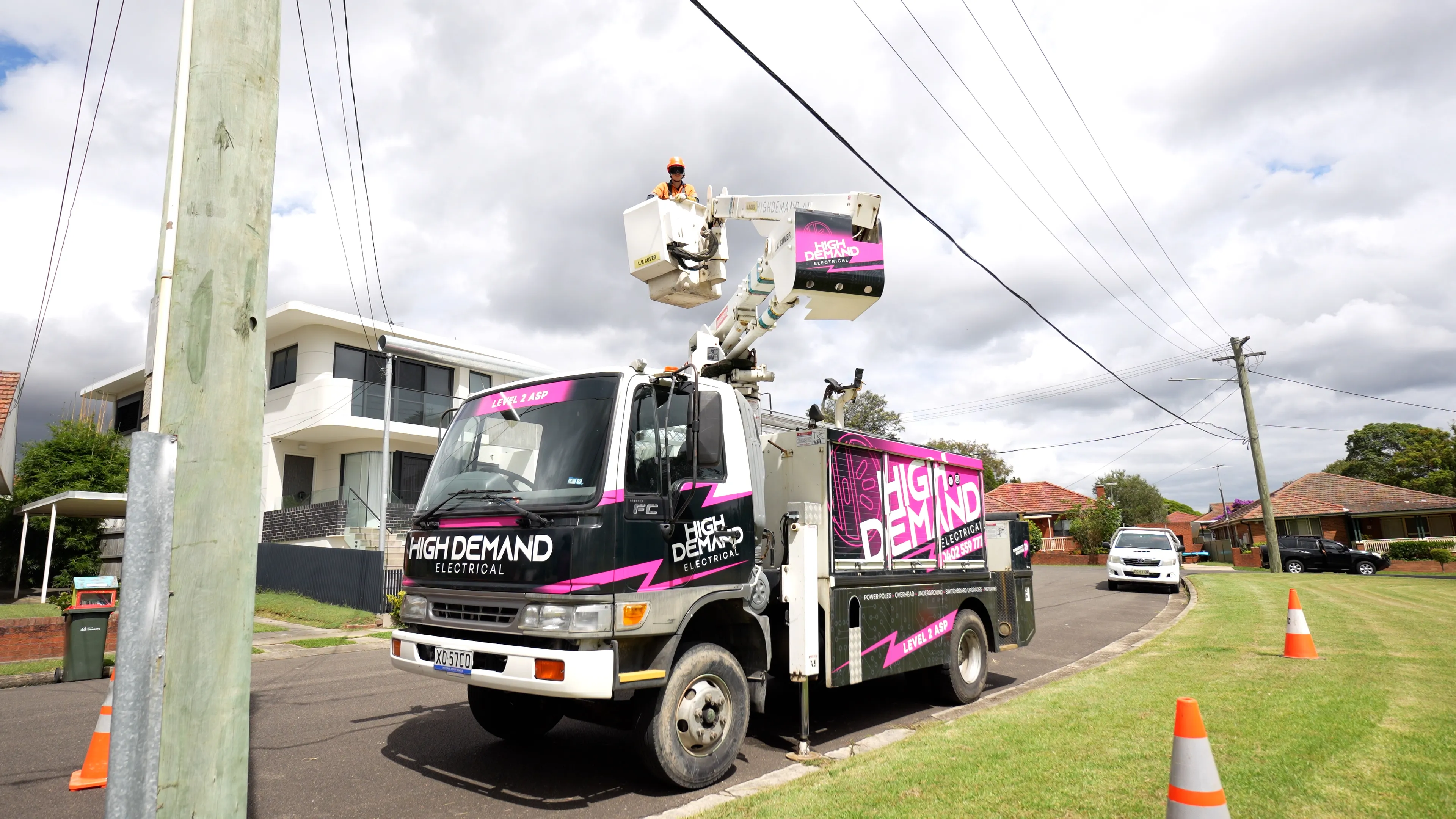
If you’re looking for a reliable, experienced, and prompt electrician, look no further than High Demand Electrical. We cater to all your electrical needs, from routine maintenance to emergency repairs and complete system installations. Our skilled team is committed to providing professional service that ensures your electrical systems run smoothly. Whether it's a small task or a large project, give us a call today. Let us meet all your electrical demands with the quality and reliability you deserve.