Switchboard Upgrade for Generator Sydney: Do You Need One?
You've decided on a standby generator — then your installer mentions your switchboard might need work first. It's a common surprise, and it raises a fair question: when it comes to a switchboard generator connection, do you actually need a switchboard upgrade, or is your existing board fine?
The short answer: sometimes yes, sometimes no. It depends on the age, capacity and condition of your current switchboard, and on how much of your home you want the generator to back up. This guide explains why the two are linked, the tell-tale signs your board needs upgrading, and what it means for your install.
👉 See our Generac generator installation service →
Why your generator and switchboard are linked
A standby generator doesn't work in isolation. When the grid drops, an automatic transfer switch (ATS) disconnects your home from the network and switches it over to generator power — then reverses when the grid returns. That transfer switch ties directly into your switchboard.
For that to work safely, your board needs the capacity to handle the load being backed up, the physical space for the new circuit and protection, and modern safety devices. A modern board with spare capacity makes this straightforward. An older or full board often doesn't have the room or the protection the job requires — which is where an upgrade comes in.
Signs your switchboard needs upgrading first
Your board is likely to need attention before a generator install if you see any of these:
- Ceramic or rewireable fuses — a clear sign of an ageing board that predates modern standards.
- No RCDs (safety switches) — these are now required on circuits, and a generator install is the moment to bring the board up to standard.
- No spare slots — a full board has nowhere to add the generator circuit or transfer-switch protection.
- An undersized main switch — the board may not be rated for the loads you want to keep running.
- An asbestos backing board — common in older homes and a safety issue that needs proper handling.
- Signs of age or damage — scorching, crowding, a mix of old and new gear, or frequent nuisance tripping.
If your board ticks any of these boxes, it's worth reading our practical switchboard upgrade guide alongside this one.
What a switchboard upgrade for a generator involves
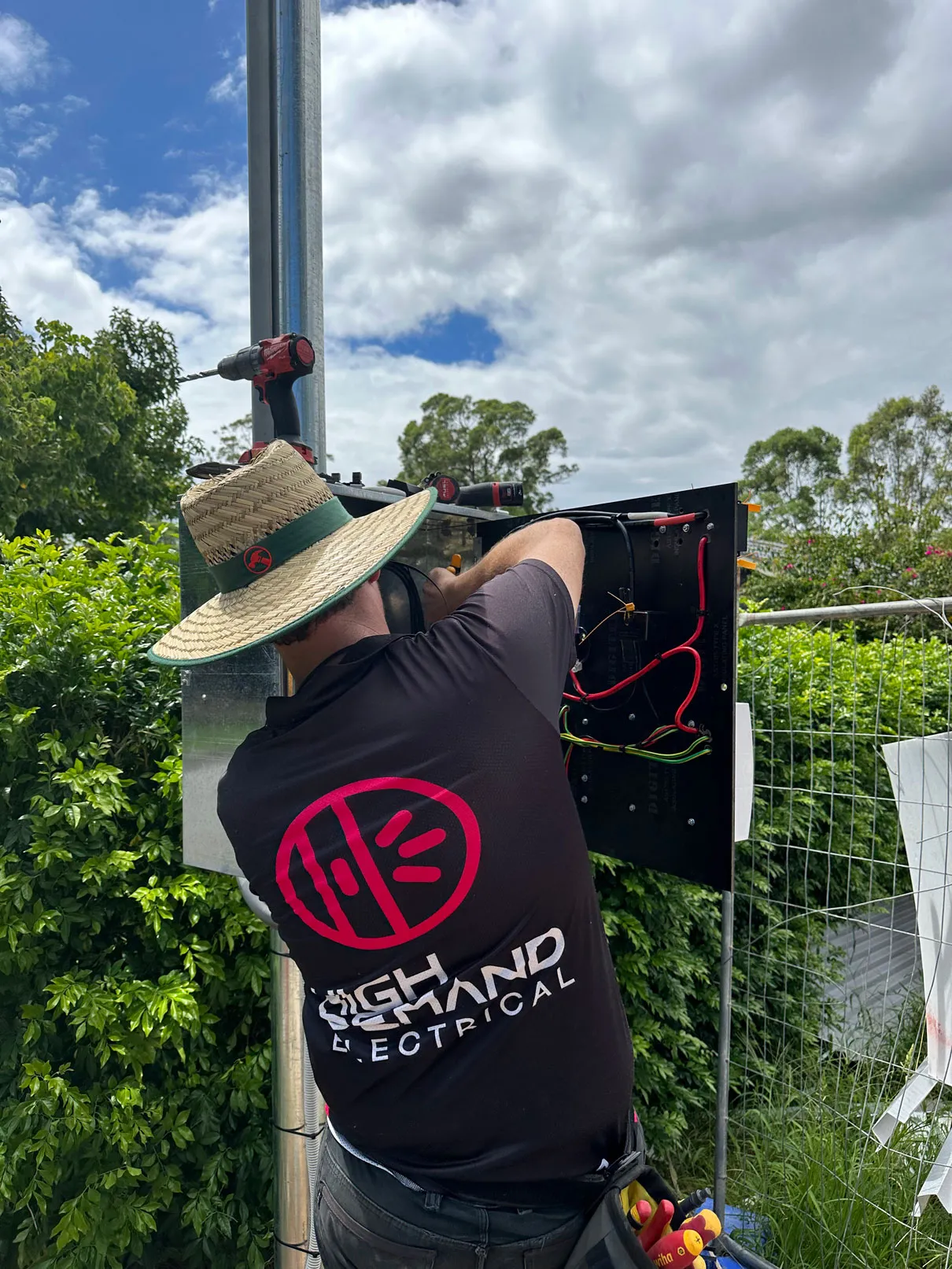
An upgrade brings your board up to current standards and prepares it for the generator. Typically that means a new enclosure with proper DIN-rail gear, RCDs and circuit breakers, a correctly sized main switch, and dedicated space for the generator circuit and transfer switch. Where you only want essential circuits backed up, the relevant loads can be grouped so the generator powers exactly what matters — fridge, lights, internet, a few power points — rather than the whole home.
Done at the same time as the generator, it's one coordinated job rather than two disruptive visits. If your supply itself is limited, a power supply upgrade may also be part of the picture.
Whole-home or essential circuits?
How much you want to back up directly affects the board work. Backing up essential circuits usually means a smaller generator and a more contained board change. Backing up the whole home — including big loads like ducted air conditioning — needs more capacity and, often, a larger unit. Sizing the generator and the board together is how you avoid paying for more than you need, or discovering too late that the board can't cope. Our Generac cost guide shows how board work feeds into the total install price.
Single-phase vs three-phase
Larger generators — and larger homes — sometimes call for three-phase power. If your property is single-phase and you're sizing up to a bigger unit, the board may need reconfiguring and a single-phase to three-phase upgrade may come into play. This is worth identifying early, because it affects both the board scope and the generator model — see our guide on generator types and sizing.
Compliance: it's Level 2 work
A switchboard upgrade tied to a generator is Level 2 ASP work, and it must be certified. Your electrician issues a Certificate of Compliance for Electrical Work (CCEW) for the board and generator wiring, and where the work touches your supply or metering, the network side is handled too. We'd also recommend switchboard-level surge protection while the board is open — it's the ideal time to add it. For the full picture on permits and certificates, see our guide on council approval for home generators in NSW.
How High Demand Electrical handles it
We never quote a generator blind. As an accredited Generac dealer and Level 2 ASP electrical contractor (Licence No. 397193C), we assess your switchboard at the site visit and tell you upfront whether it needs upgrading — so the board work is in your quote, not a surprise on installation day.
Then we deliver it as one coordinated job: board upgrade, transfer switch, generator connection, gas coordination and certification, all from the same licensed team. Whether you're looking at a Generac Guardian series standby or a simpler changeover setup, your board will be ready for it.
One Team for the Board and the Generator
We'll assess your switchboard and your backup needs together, tell you upfront whether an upgrade is required, and deliver the board work, transfer switch and Generac install as one coordinated, certified job.
High Demand Electrical — accredited Generac dealer and Level 2 ASP installer, Sydney. Licence No. 397193C.
All prices are indicative and based on typical Sydney installations. Whether a switchboard upgrade is required, and its cost, depends on your existing board, supply and the generator specified — always obtain a professional site assessment.
Related Services

Powering Your Needs with Expertise
If you’re looking for a reliable, experienced, and prompt electrician, look no further than High Demand Electrical. We cater to all your electrical needs, from routine maintenance to emergency repairs and complete system installations. Our skilled team is committed to providing professional service that ensures your electrical systems run smoothly. Whether it's a small task or a large project, give us a call today. Let us meet all your electrical demands with the quality and reliability you deserve.