Meter Box Upgrade Sydney: Cost, Signs & What to Expect
Written by Chris · Licensed Level 2 ASP Electrician · Licence 397193C · Published 16 July 2026
Your meter box is the gateway between the electricity network and your home. It houses your electricity meter, main switch, and — in older homes — ceramic fuses that should have been replaced decades ago. When it's outdated, damaged, or made from asbestos-laced material, a meter box upgrade isn't optional. It's a safety issue, and in Sydney it's work that only a licensed Level 2 ASP electrician is legally allowed to carry out.
This guide covers what a meter box upgrade actually involves, how much it costs in Sydney, the warning signs your box needs replacing, and what to expect on the day.
What Is a Meter Box Upgrade?
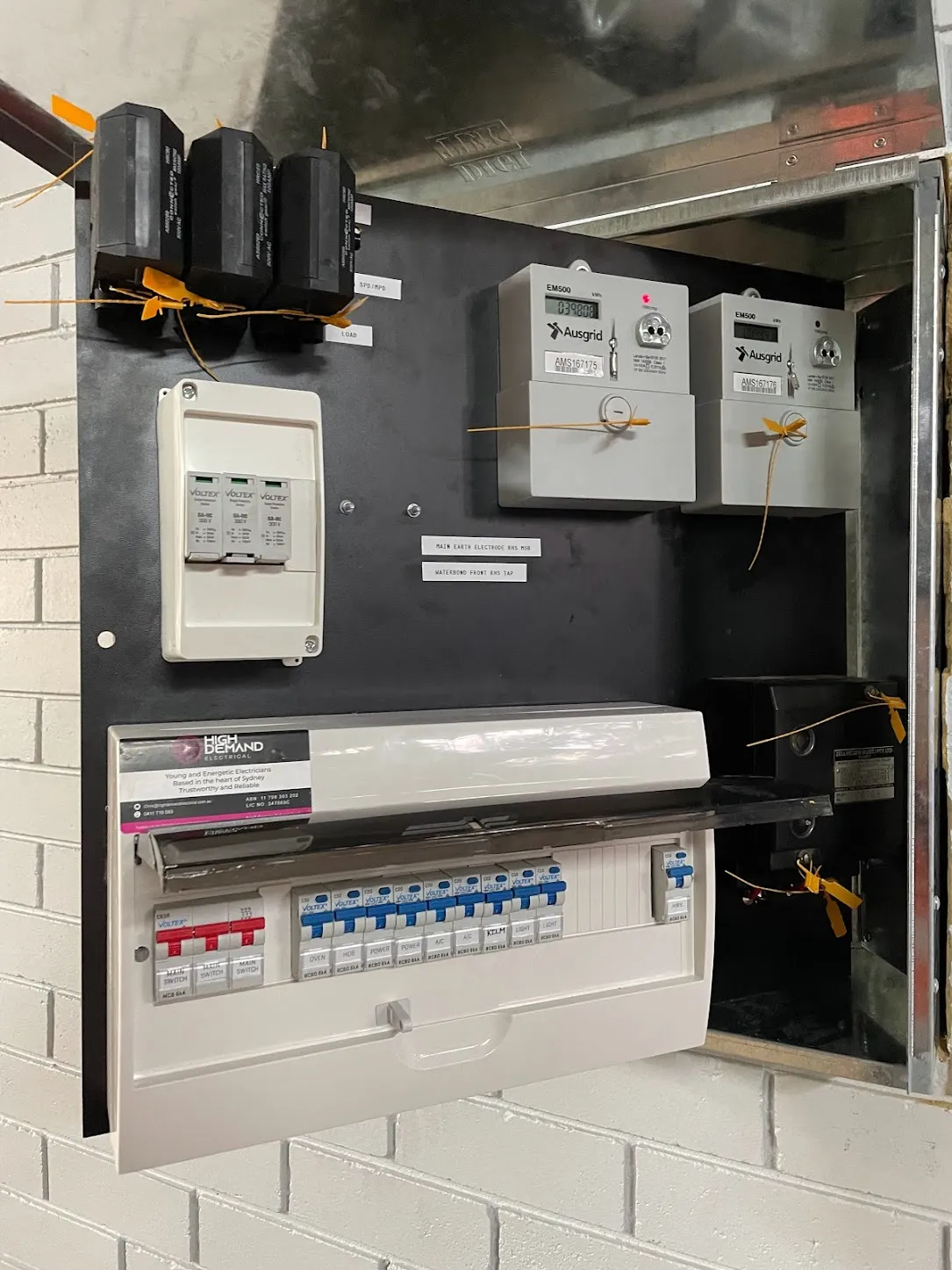
The meter box (also called a meter board or meter enclosure) is the lockable panel mounted on the outside wall of your home or in your garage. Inside it sits your electricity meter (which your retailer reads to calculate your bill) and the main service fuse — the point where the network's power supply connects to your home's wiring.
An upgrade typically involves one or more of the following:
- Replacing an asbestos or deteriorated enclosure with a new weatherproof meter board
- Upgrading from a single-phase 60A or 100A supply to 200A to meet the demands of modern homes (EV chargers, air conditioning, solar systems)
- Replacing ceramic fuses with modern circuit breakers and safety switches
- Separating the meter box from the switchboard where they're in a combined old-style panel
- Repositioning the meter board to a compliant location for network access
In NSW, the metering installation — the enclosure, meter, service fuse, and any connected network equipment — is classified as controlled network infrastructure. That's why only a licensed Level 2 Accredited Service Provider (ASP) can legally touch it. A standard electrician can work on the wiring inside your home; they cannot disconnect from the network, replace the service fuse, or modify the meter board itself.
Signs Your Meter Box Needs Upgrading
Many Sydney homes — particularly those built before 1980 — still have meter boxes that are well past their useful life. Here's what to look for:
1. Asbestos Meter Board
If your home was built before the mid-1980s, there's a reasonable chance the meter board backing material contains asbestos. These boards often look like a flat grey sheet behind the meter and fuses. They're not immediately dangerous when intact, but any repair, upgrade, or modification to the enclosure requires certified asbestos removal — which must be done before electrical work begins. If your board looks old and grey and no one has ever replaced it, assume it needs checking.
2. Ceramic Fuses Instead of Circuit Breakers
Ceramic fuse holders (the ones where you replace a fuse wire when power trips) were standard until the 1970s. They provide almost no overload protection compared to modern circuit breakers, and they cannot be retrofitted with safety switches. If your home still has ceramic fuses, a full switchboard upgrade — including the meter board — is overdue.
3. Your Power Supply Is Undersized
Older homes were connected to the network on a 60-amp or 100-amp supply. Modern households with ducted air conditioning, electric ovens, EV chargers, and solar systems regularly exceed this. Common signs include circuits that trip under normal load, lights that dim when large appliances switch on, or an electrician telling you there's no room to add new circuits. A supply upgrade — handled entirely by a Level 2 ASP — involves coordination with Ausgrid or Endeavour Energy and replacement of the service fuse and metering infrastructure.
4. Physical Damage or Water Ingress
Meter boxes live outdoors and take a beating. Cracked enclosures, rusted components, or signs of moisture inside the box are safety hazards. Water and electricity don't mix, and a damaged enclosure can void your home and contents insurance.
5. You've Received a Defect Notice
Ausgrid and Endeavour Energy periodically inspect metering installations. If they find non-compliant equipment, they issue a defect notice with a deadline — often 30 days — to have the work done. Ignoring it can result in disconnection. If you've received a letter, call a Level 2 ASP immediately.
Meter Box Upgrade Cost in Sydney (2026)
Costs vary depending on the scope of work, your network area, and the condition of your existing installation. Here are realistic ranges for Sydney:
- Basic meter board enclosure replacement (no asbestos, standard access): $800–$1,500
- Asbestos board removal + new enclosure: $1,500–$2,500 (asbestos removal adds $500–$800 depending on volume)
- Supply upgrade from 100A to 200A (including new service fuse, metering, network coordination): $1,800–$3,500
- Full upgrade — new enclosure, safety switches, circuit breakers, 200A supply: $2,500–$5,000+
These figures include the Level 2 ASP component (network disconnection, service fuse work, meter coordination) as well as the licensed electrical work inside the board. They don't include any rectification of old wiring, which may be flagged during the inspection.
The network distributor (Ausgrid or Endeavour Energy) does not charge separately for most standard supply upgrades — the cost is absorbed into the electrician's quote — but there can be fees for urgent or non-standard work. Always confirm this upfront.
What Happens on the Day
Here's what a typical meter box upgrade looks like from your perspective as a homeowner:
- Quote and scope confirmation. The Level 2 ASP inspects the existing installation, confirms the scope of work, and checks for asbestos. If asbestos is present, a certified removalist must attend before electrical work begins — this is usually coordinated by the electrician.
- Network notification. The Level 2 ASP notifies Ausgrid or Endeavour Energy of the planned work. For most residential jobs, this doesn't require a scheduled outage — the ASP can isolate the supply themselves.
- Supply isolation. The Level 2 ASP disconnects your home from the network at the service point. Your power goes off for the duration of the work — typically 2–4 hours for a straightforward job, longer if additional work is involved.
- Board replacement and upgrades. The old enclosure is removed (and safely disposed of if it contains asbestos), the new meter board is installed, service fuse replaced or upgraded, and any internal electrical work completed.
- Inspection and reconnection. The Level 2 ASP inspects the completed work, reconnects the supply, and notifies the network. The meter is read at isolation and reconnection to ensure accuracy.
- Certificates issued. You'll receive a Certificate of Compliance for Electrical Work (CCEW) covering the work completed. This is required for insurance purposes and for any future sale of the property.
Can a Standard Electrician Do This Work?
No. This is one of the most common misunderstandings around meter box work. A licensed electrician can install the new board, fit circuit breakers, and run internal wiring — but they cannot legally disconnect from the network, replace the service fuse, or modify any component on the network side of the meter. That work requires a Level 2 ASP licence, and it's not a technicality. It's a safety classification enforced by DNSP (network distributor) rules in NSW.
For a full picture of what separates Level 2 ASP work from standard electrical work, see our guide on the difference between a standard electrician and a Level 2 ASP in NSW.
Meter Box Upgrades and Switchboard Upgrades — What's the Difference?
People often use these terms interchangeably, and it's understandable — in older homes they're the same panel. In modern homes, the meter box (containing the meter and service fuse) is a separate, sealed enclosure from the main switchboard (containing circuit breakers and safety switches inside your home or garage).
Many Sydney homeowners need both upgraded at the same time — the old asbestos board goes, the service fuse gets upgraded, and the internal switchboard gets modernised with safety switches. Having a single Level 2 ASP handle both components means one team, one power-off, and one compliance certificate. For more on what a full switchboard upgrade involves and costs in Sydney, see our dedicated guide.
How Long Does It Take?
A straightforward meter board replacement with no asbestos: 2–4 hours. Add asbestos removal (which typically requires the asbestos removalist to attend separately, often the day before): plan for the electrical work to take place the following day. A combined meter box plus full switchboard upgrade: 4–8 hours, sometimes spread across two visits.
Preparing Your Home for the Upgrade
- Clear the area around the meter box so the team can work safely
- Charge phones and laptops the night before — you'll be without power during the job
- Let your network provider know if you have medical equipment that requires power
- If you have a solar system, notify the installer — the inverter will need to be shut down safely before the supply is isolated
Ready to Book a Meter Box Upgrade in Sydney?
High Demand Electrical is a licensed Level 2 ASP servicing all of Sydney. Chris and the team have completed hundreds of meter box and switchboard upgrades across greater Sydney — from Parramatta to the Eastern Suburbs, the North Shore to the Hills District. We handle the network coordination with Ausgrid and Endeavour Energy, manage asbestos referrals, and issue all required compliance certificates.
Call Chris on 1300 074 737 or learn more about the full range of Level 2 ASP services we provide across Sydney.

Powering Your Needs with Expertise
If you’re looking for a reliable, experienced, and prompt electrician, look no further than High Demand Electrical. We cater to all your electrical needs, from routine maintenance to emergency repairs and complete system installations. Our skilled team is committed to providing professional service that ensures your electrical systems run smoothly. Whether it's a small task or a large project, give us a call today. Let us meet all your electrical demands with the quality and reliability you deserve.