Why Your Electricity Bill Spikes in Winter — A Sydney Breakdown

Winter electricity bills spiking? It's not just heating. We break down exactly which appliances are driving the increase—and what you can actually do about it.

If you've just opened your winter electricity bill and done a double-take, you're not alone.

For most Sydney households, winter electricity bills are noticeably higher — sometimes 20–40% more than summer months. But here's the thing: it's not always because you're using the heating recklessly, and it's rarely just one appliance causing the jump.

Winter electricity bills spike because multiple loads run at the same time. Your heating kicks in when people are home. Your hot water system works harder. You use the dryer more often. The lights stay on longer. It all compounds. And if you don't understand what's driving the increase, you might start thinking about switching electricity retailers when the real problem is actually what you're running and when you're running it.

Let's break down exactly what's happening with your winter bill.

The Winter Weather Effect: Why Heating Matters

Sydney winters are mild compared to Melbourne or Tasmania, but your electricity bill doesn't reflect that. Winter bills are typically 20–40% higher than summer—sometimes more.

The reason? Heating.

For most Sydney households, heating is now a major electricity load. Whether you're using a reverse-cycle air-con unit, electric heaters, or panel heaters, you're running a significant load that doesn't exist in summer. According to energy.gov.au, heating and cooling account for approximately 40% of household energy use overall. In winter, heating dominates that figure.

Here's the catch: most people heat during morning and evening hours — exactly when peak-rate electricity costs the most. You wake up, the heating kicks in. You come home from work, it's running again. That timing matters for your bill far more than the absolute amount of energy used.

The other thing most people don't realise: every degree you set above the recommended 18–20°C range increases energy use by 5–10%. So if your heating is set to 22°C instead of 20°C, you're using 10–20% more energy just to maintain that extra warmth. energy.gov.au recommends 18–20°C for winter — which feels cool but is the efficient sweet spot.

High Demand Electrical infographic showing how heating and cooling load shifts across the year in Sydney homes, comparing seasonal demand patterns from summer through winter with an illustrative line chart.
High Demand Electrical illustrates how household heating and cooling demand can shift across the year, with cooling rising in hotter summer months and electric heating creating stronger winter load.

Hot Water: The Silent Winter Killer

Here's a stat that surprises most people: hot water accounts for approximately 25% of household energy use on average, according to energy.gov.au.

In winter, that percentage gets worse.

A typical household uses about 80–120 litres of hot water daily. In winter, that might jump to 150–180 litres due to longer showers and more hot laundry. An electric storage hot water tank heating that extra volume uses significant electricity — especially if the tank is losing heat to cold pipes and outdoor air.

But here's where it gets interesting. Many Sydney homes have electric storage hot water systems running on standard tariff (not controlled load), which means you're paying peak rates to heat water at peak times. That's inefficient. That's where the biggest opportunity sits — but we'll get to that in a moment.

The difference between system types matters too:

  • Electric storage tank: Loses more heat in winter through pipes and the environment, so it uses more energy to maintain temperature
  • Gas continuous flow: Better efficiency because there's less standby heat loss, but still uses more in winter for hot water demand
  • Heat pump: Most efficient option, but fewer Sydney homes have these installed yet

If your home has an electric storage hot water system, here's the key question: Is it on controlled load, or on standard tariff?

If it's on standard tariff, you're heating water at peak times and paying peak rates. That can make up a significant chunk of your winter bill — potentially $30–50 extra per month just from heating hot water inefficiently.

If it is on controlled load (a cheaper, off-peak rate for hot water), you're already capturing some winter savings. But many homes that could be on controlled load aren't set up for it — either the meter doesn't support it, or the hot water system isn't wired for controlled load operation.

This is actually one of the biggest gaps we see: homes that could cut their hot water costs by $30–50/month but don't know it, or don't know their setup doesn't support it yet.

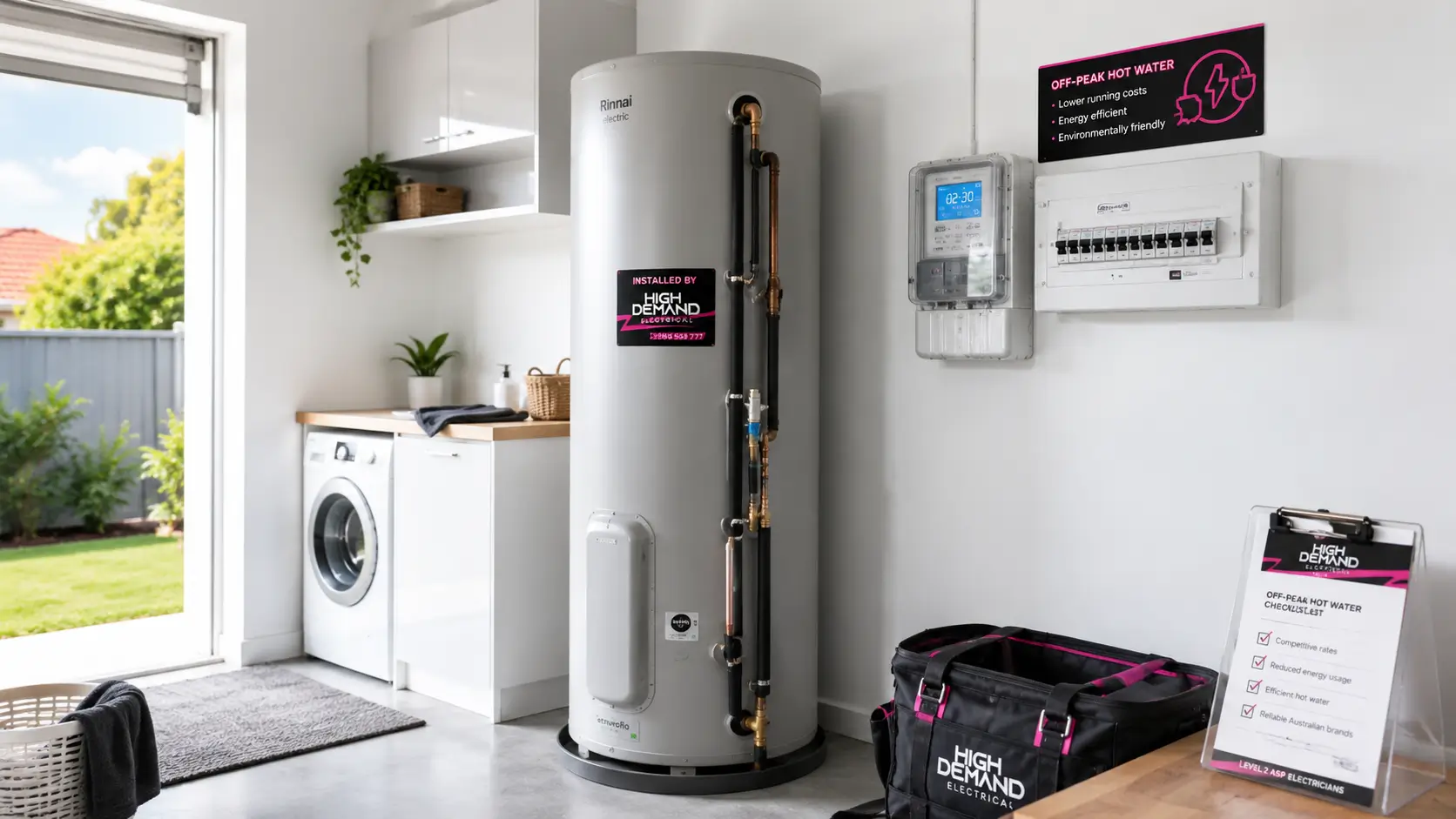
Curious if off-peak hot water integration could work for your home? Learn about off-peak hot water options and whether your setup qualifies.

High Demand Electrical infographic comparing summer and winter hot water usage patterns, including showering, laundry, household habits, and how controlled load may help reduce hot water costs on the right setup.
High Demand Electrical explains how seasonal hot water habits can affect household energy use, from showers and laundry to controlled load timing for off-peak water heating.

The Other Appliances That Add Up

Heating and hot water are the big two, but they're not the only culprits.

Clothes dryers get used 2–3 times more often in winter when the weather is wet and cold. Dishwashers run more frequently because people cook more hot meals indoors. Lights stay on 2–3 hours longer due to shorter days. Pool pumps might be heating. Ovens and stovetops get more use.

None of these alone is a massive load. But when they run at the same time as heating and hot water, the total load increases significantly. That's why winter bills spike even in mild Sydney winters.

Here's a rough breakdown:

Appliance Winter Usage Pattern Estimated Impact
Clothes dryer 2–3x more frequent during wet weather +$15–25/month
Dishwasher More dishes and cooking indoors +$5–10/month
Lighting 2–3 hours extra per day +$10–15/month
Cooking
(oven/stove)
More hot meals prepared +$10–15/month
Combined effect Total estimated increase from everyday winter usage changes +$40–65/month

It's not one thing — it's the combination.

Why Thermostat Settings and Draught Sealing Matter

Here's the empowering bit: a lot of your winter bill is actually within your control.

Most people don't realise that thermostat control is one of the highest-impact changes they can make. If your heating is set to 22°C instead of 20°C, you're using approximately 10–20% more energy just to maintain that extra warmth. That's a huge swing for a small adjustment.

energy.gov.au's recommendation of 18–20°C for winter might feel cool, but it's the efficient sweet spot. And you don't have to stay at that temperature all night — many homes benefit from night setback, lowering temperature to 16°C whilst you're sleeping, then warming up in the morning.

Draught sealing is the other quick win. Many Sydney homes have poor sealing around doors and windows. A $100–500 DIY draught-sealing job (or $500–2,000 professionally) can reduce heating demand by 5–10% without changing your thermostat at all. Quick wins: door seals, window draught excluders, and even letterbox plugs make a difference.

But here's the thing: Thermostat control and draught sealing only go so far. They'll help, but if hot water and heating are your biggest winter loads, there's a bigger question underneath: What if you could shift some of these loads to cheaper times of day?

That's where off-peak electricity and controlled load come in. But — and this is important — not every home is set up to use them. Your meter, your electrical setup, and your retailer all play a role.

High Demand Electrical infographic showing where heat escapes in a typical home, highlighting common problem areas such as windows, doors, cracks, roof and ceiling spaces, floor-to-wall junctions, and exhaust vents, with a callout about meter and home setup affecting cost-saving options.
High Demand Electrical illustrates the common areas where heat can escape from a typical home, including windows, doors, gaps, and ceiling spaces, while noting that other ways to cut energy costs depend on your meter and home setup.

How to Know If Your Increase Is Normal

The most important thing to do when you get a winter bill is compare it properly.

Don't compare your winter bill to your summer bill — they'll always be different. Instead, energy.gov.au recommends comparing your winter usage against the same period in the previous year. That removes seasonality guesswork.

Here's how to do it:

  1. Find last winter's bill (June–July from the year before)
  2. Find this winter's bill (same month this year)
  3. Look at "total consumption" in kWh (not the dollar amount)
  4. Divide the kWh by the number of days in the billing period
  5. Compare the daily average (e.g., 12 kWh/day summer versus 18 kWh/day winter = 50% increase — that's normal)

A 30–50% increase in consumption from last year's same period is typical for Sydney winter. If you see a spike above 50%, that's worth investigating — there might be a faulty appliance or a behaviour change you haven't noticed.

Also watch the dollar amount separately. Your consumption might be up 35%, but your bill might be up 45% because the electricity retailer adjusted their rates in winter (which is common). That's two different things happening at once, and understanding which is which helps you know what to tackle.

Your Winter Bill Breakdown: Where the Increase Actually Comes From

Let's synthesise what we've covered.

Your winter electricity bill isn't spiking because of one thing — it's the combination of heating, hot water, lighting, and behavioural changes all happening at the same time. Here's roughly how the increase breaks down:

  • Heating: 30–40% of the increase
  • Hot water: 20–25% of the increase
  • Lighting: 10–15% of the increase
  • Other appliances (dryer, dishwasher, cooking): 15–20% of the increase

In Sydney's mild winters, it's not as dramatic as Melbourne or Canberra, but it's still significant.

The important part: most of this is predictable and normal. Your bill going up in winter doesn't mean something's wrong. It means winter is happening, and your home is using more electricity to stay comfortable.

What This Means for Your Next Step

Now that you understand why your winter bill is higher, you're probably wondering: What can I actually do about it?

The simple answer: thermostat control and draught sealing work immediately. But they're not the full story.

Here's the bigger picture: Could you shift some of these loads to cheaper off-peak electricity periods?

Many Sydney households could benefit from this. For example:

  • Off-peak hot water (controlled load): Instead of heating water at peak times and peak rates, your hot water tank runs during cheaper off-peak hours. This could save $30–50/month on hot water alone.
  • Off-peak general usage: Some electricity plans offer cheaper rates during off-peak hours (typically evening and overnight). If you could shift dryer use, dishwasher runs, or EV charging to these windows, you'd cut those costs.
  • Time-of-use plans: Newer plans let households see exactly when peak/off-peak periods are and adjust usage accordingly.

But here's the catch: Not all homes are set up for this.

Some homes have the right meter configuration to support controlled load. Some don't. Some have hot water systems that can be switched to controlled load operation. Some can't. Some homes have a smart meter that enables time-of-use pricing. Others have older meters that don't.

Your meter board, your electrical setup, your hot water system, and your retailer's available plans all determine what's actually possible for your home.

This is where most people get stuck: they know their bill is high, they've heard about off-peak solutions, but they don't know if their home qualifies or how to check.

Ready to Do Something About It?

Now that you understand why your winter bill is higher, the next question is: what can you actually do?

The quick fixes, such as thermostat control and draught sealing, can help immediately. But if you want to explore whether off-peak electricity or controlled load hot water could work for your home, you'll need to check whether your setup supports it.

This is where many Sydney households find their biggest winter savings — but only if the setup is right.

Powering Your Needs with Expertise

If you’re looking for a reliable, experienced, and prompt electrician, look no further than High Demand Electrical. We cater to all your electrical needs, from routine maintenance to emergency repairs and complete system installations. Our skilled team is committed to providing professional service that ensures your electrical systems run smoothly. Whether it's a small task or a large project, give us a call today. Let us meet all your electrical demands with the quality and reliability you deserve.